Veteran-owned tree service · Austin area24/7 tree emergency: (512) 387-2671
Iron Branch Tree Services Request an assessment
Menu
Services
Service areasReviewsOur standardContactRequest an assessment
Illustrative mature live oak canopy over a refined Central Texas garden

Oak-safe pruning for Central Texas oaks

Oak Wilt-Safe Pruning

Preventive pruning practices that reduce oak wilt risk. Avoid pruning oaks February–June; schedule routine work July–January, paint fresh wounds, sanitize tools, and follow local disposal practices.

Service / property guide

Oak-wilt-safe pruning starts with the season, the wound, and the tree’s condition. This guide frames a careful scope before work begins.

01

What oak-wilt-safe pruning means here

Oak-wilt-safe pruning focuses on reducing the chances that a pruning wound will become an entry point for oak-wilt pathogens or the insects that spread them. In Central Texas the practical steps are timing, immediate wound protection, and strict tool sanitation between trees. We emphasize prevention and careful handling rather than treatments or injections, which we do not provide or recommend here.

For homeowners that means scheduling routine pruning inside a lower-risk window, painting fresh wounds right away, and keeping potentially infected material from moving offsite. If you have questions about active infections or specialized treatments, direct those to Texas A&M Forest Service or an appropriately qualified provider; our crews handle preventive pruning, removals, and responsible disposal.

The work, in order

A controlled sequence from assessment to close

01

Site assessment and hazard check

Inspect oak species, canopy position, and any signs of decline. Identify access, overhead utilities, and ground hazards. If a tree is an immediate safety risk, discuss options that may include removal; confirm utility boundaries for work near lines.

02

Schedule in the lower-risk window

Plan routine oak pruning for July through January to reduce the risk of attracting vectors. For urgent safety pruning outside that window, we limit cuts to what is necessary and document the reason on the job ticket.

03

Sanitize tools and paint wounds

Sanitize cutting tools between each oak using an approved disinfectant and documented technique. Paint every fresh oak wound immediately with an appropriate wound dressing to reduce attraction to sap-feeding insects.

04

Prune with conservative cuts and safe rigging

Make clean, conservative cuts to remove deadwood and lower risk without excessive canopy loss. Use rope rigging and bucket lifts where needed to control drop zones and protect surrounding property; we will not work inside utility clearances.

05

Debris handling and final clean-up

Separate oak debris when practical, chip or haul per your direction and local rules, and leave a clear accounting of what was removed or retained. Provide you with the post-job recommendations for monitoring and next steps if symptoms appear.

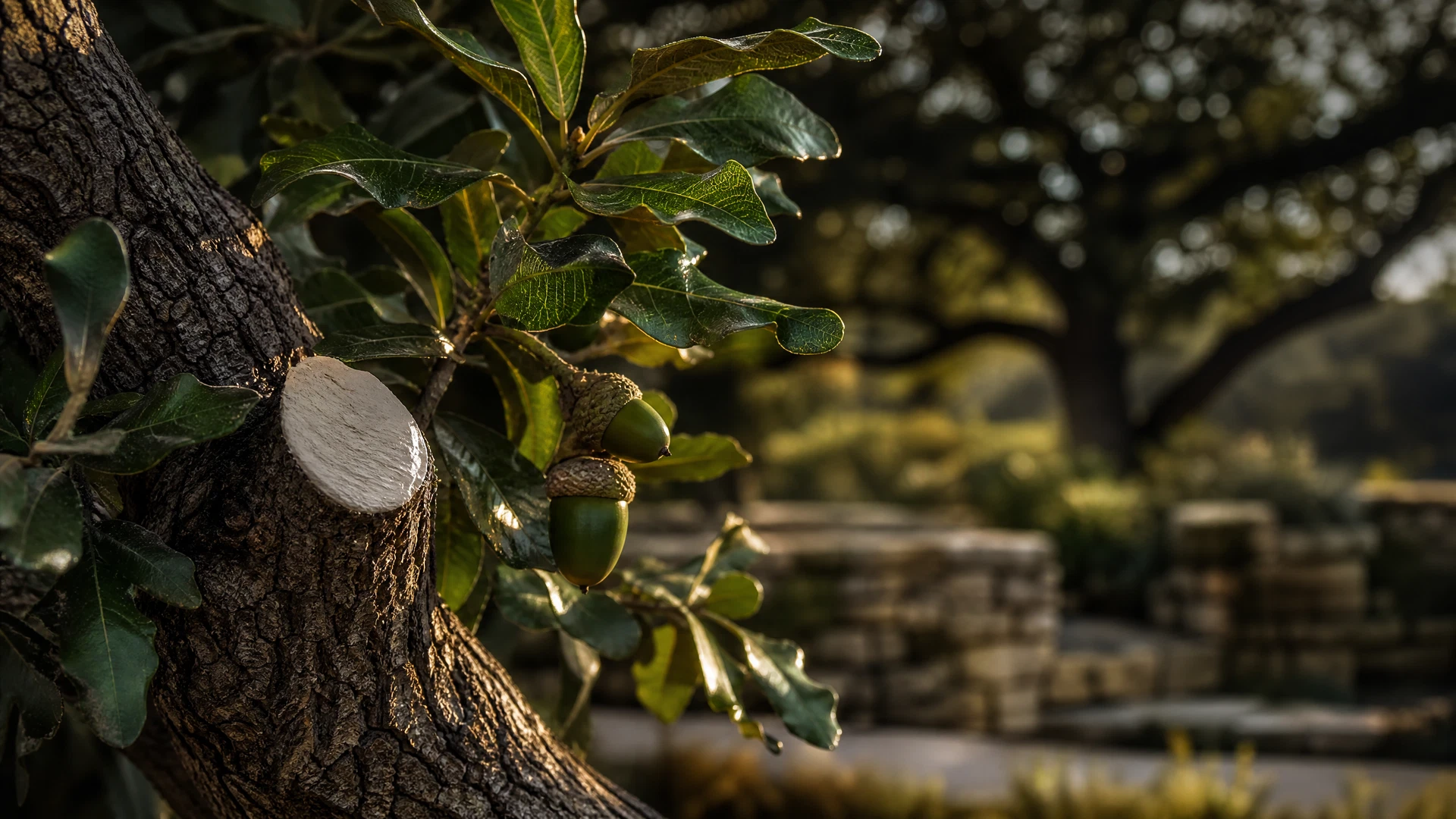
Illustrative Central Texas residential tree and property detail

Property note

The property in context

The work is planned around the living canopy, the physical limits of the property, and the finish a homeowner expects once the site is clear.

Illustrative Central Texas residential tree and property detail
Illustrative Central Texas property context — the work plan begins at the site.

02

Why timing matters in the Austin I‑35 corridor

In Central Texas the seasonal behavior of sap-feeding beetles and the way oaks move sap make pruning timing the primary practical control homeowners and crews can use. Avoid pruning oaks February through June. Routine pruning done in the lower-risk window — July through January — reduces the period when fresh wounds are more likely to attract vectors that can spread oak wilt.

This timing guidance fits the climates and oak types commonly found along the I‑35 corridor from Georgetown through Round Rock, Pflugerville and Manor, and south to Manchaca and Buda. Local microclimates vary, so confirm conditions and any specific regulations for your address before scheduling work.

03

On-site process: how our crews work to reduce risk

We start with a site assessment: identify oak species and condition, check access and hazards, and look for signs that suggest a recent infection so we can recommend appropriate next steps. If a tree shows suspected active symptoms, we do not attempt to diagnose or treat it on-site; we isolate the work area, avoid moving material offsite, and advise you to contact Texas A&M Forest Service or an appropriately qualified provider for evaluation.

For routine pruning scheduled in the lower-risk window our crew prunes in small sections to limit large open wounds, makes clean cuts, and paints every fresh oak wound immediately — year‑round — with an appropriate sealing product that we carry for oak work. Tools are sanitized between trees using an approved disinfectant and a documented process. Note: work near energized lines belongs with the utility; we do not attempt work on or inside the utility’s domain.

From the property owner

“James was knowledgeable and thorough with the best approach to preserve the trees during the hot Summer months. Great job!”
5.0 Google rating / 97 reviewsLarry AlonzoRead verified reviews
Illustrative Central Texas residential tree and property detail
Illustrative canopy and property study — access, protection, timing, and cleanup alter the work plan.

04

Debris handling, disposal and moving wood

How pruning debris is handled affects spread risk. We separate oak material from non‑oak when it’s practical, keep suspect material on-site, and haul or chip only when local rules and your direction allow. Avoid moving suspect firewood from your property onto other properties — that’s a common way pathogens and pests spread. If removal is necessary we discuss options: chipping onsite, burning only where permitted, or properly staged removal for municipal pickup.

Local ordinances and neighborhood rules vary across Austin, Georgetown, Pflugerville, Manor, and Buda, so confirm any permit or burn restrictions for your address before we begin. If we recommend disposal at a specific facility, you should confirm the facility’s acceptance policies. We will not perform or suggest trenching or injections as part of oak-wilt response; those are treatment topics a qualified provider should address.

05

Cost drivers and decision boundaries

The main factors that determine price are tree size, canopy position, the number of trees, access and site hazards, and what you want done: selective pruning to reduce risk scope less than large crown reductions or removals. When pruning oaks for oak-wilt prevention, crews take extra time for sanitation and wound painting; those steps add measurable labor and material cost compared with standard pruning. If debris is chipped onsite rather than hauled, disposal cost may be lower but chipping adds crew time.

Decision boundaries we use on estimate and work orders: we will not perform pruning during the February–June restricted window unless it is an immediate safety hazard; we will not move suspected infected wood offsite without the client’s clear instruction and understanding of the risks; and we will refuse work that requires approach inside utility line clearances — work near energized lines belongs with the utility. For clarity, request a written quote and we’ll list the assumptions and exclusions so you know what’s included.

06

Homeowner checklist and local next steps

Before you call, walk the property and note which oaks you want pruned, any visible declines, and access points for equipment. If you see sudden wilting, bronze discoloration, or leaves that drop in summer, do not move branches or firewood around the neighborhood — contain debris and make note of it for the service visit. We will not diagnose disease from photos; in suspicious cases we recommend contacting Texas A&M Forest Service or an appropriately qualified provider for a formal evaluation.

To arrange work along the I‑35 corridor from Georgetown through Manor down to Manchaca and Buda, call (512) 387-2671 to discuss your property and request a written quote. We’re veteran‑owned, locally owned, and fully insured; our crews focus on safe pruning and responsible disposal. If treatment or specialized disease management is a possibility, we’ll point you to the appropriate provider and keep our scope limited to prevention, pruning, and removal as needed.

Where this work happens

Where this work happens in the Austin area

AustinGeorgetownRound RockCedar ParkLeanderHuttoPflugervilleWells BranchSunset ValleyManchacaBudaManorTarrytownHyde ParkAllandaleCrestviewBarton Hills & ZilkerTravis HeightsCircle COak Hill

Considered answers

Straight answers about oak-wilt-safe pruning

When is it safe to prune oaks to reduce oak wilt risk?

Avoid routine oak pruning February through June. The lower‑risk window is July through January. If a limb presents an immediate safety hazard during the restricted months, crews will limit cuts to the minimum needed to eliminate the hazard and document why the work was necessary.

Do you paint oak wounds and why?

Yes. We paint every fresh oak wound immediately, year‑round. Painting helps reduce the attraction of sap‑feeding insects to fresh wounds and is a standard preventive step in oak‑safe pruning. Painting is part of our on‑site process and is reflected in estimates.

How do you sanitize tools between trees?

We follow a documented procedure: remove sap and debris, then apply an approved disinfectant to cutting surfaces and allow the required contact time before moving to the next oak. This limits potential pathogen transfer. Tool sanitation adds crew time but is essential for oak‑safe work.

Can you diagnose oak wilt from a photo?

No. We do not diagnose oak wilt from photos. Visual signs can be similar across several problems. If you suspect oak wilt, contact Texas A&M Forest Service or an appropriately qualified provider for an on‑site diagnosis. We will limit our scope to prevention, pruning, and safe disposal unless a qualified provider recommends otherwise.

What should I do with cut wood from an oak that may be diseased?

Do not move suspect firewood off the property. Moving potentially infected wood spreads disease. Keep suspect material contained and follow local disposal guidance — chipping onsite or arranging approved removal are common options. We will explain disposal choices on the estimate based on local rules.

Are there permits or local rules I should know about?

Yes. Permits and regulations vary across the I‑35 corridor communities we serve — Georgetown, Round Rock, Pflugerville, Manor, Manchaca and Buda — and sometimes within city limits. Confirm current requirements for your address before work begins. If a permit is needed, we can help explain the process but you should verify requirements with your local permitting office.

Private assessment

Begin with the property.

Tell us where the tree stands, what changed, and what it could reach. We will clarify the next step before work begins.

For urgent work, call (512) 387-2671

Your request is sent securely to Iron Branch. For an active emergency, call from a safe location.