
Round Rock, TX — I-35 corridor service
Tree care for Round Rock properties.
We work on the Blackland clay and limestone edges of Round Rock, handling live oaks, cedar elms, pecans and hackberries with attention to local soil, wind exposure and the city permit portal. Call (512) 387-2671 to request a written quote.
Round Rock / local guide
A property guide for round rock / local guide frames the questions that shape access, protection, timing, and the intended finish before a written scope.
01
Local conditions that change the work
Round Rock properties sit on a patchwork of Blackland clay and thin limestone edges. Clay soils compact and hold water which affects root stability; thin soils over limestone mean roots spread laterally and can snap more readily in high wind. Those soil differences change how we prune, where we place cuts, and what we recommend for long-term risk reduction.
Many yards here are in older neighborhoods with big live oaks and pecans, or newer subdivisions with smaller, denser plantings. Live oaks and cedar elms dominate the canopy and respond well to selective pruning, but they also react poorly to heavy topping cuts. Open yards along the I-35 corridor and on the limestone edge see more wind and hail exposure, so we factor that into branch removal sequences and crane placement if needed.
02
Pruning, crown work, and oak-wilt-aware practices
Pruning in Central Texas is about timing and technique. For live oaks and cedar elms we do selective branch removal to improve structure, reduce leverage on large limbs, and preserve natural form. On properties with open exposure we favor balancing cuts on the windward side and thinning interior limbs to reduce sail area. We avoid indiscriminate large flush cuts; instead crews make measured cuts, clean up debris promptly, and leave the tree with clear targets for future maintenance.
Oak wilt is something every Round Rock homeowner should know about. We do pruning practices that reduce oak-wilt risk—no pruning of susceptible oaks during high-risk months without a plan, prompt disposal of oak brush, and advising on referrals for oak-wilt diagnosis when appropriate. We will not claim to treat oak wilt ourselves; if a tree is suspected of having oak wilt we can advise and refer to specialists who handle proven treatments.
03
Tree removal, permits, and utility coordination
When a tree needs removal — whether dead, structurally unsound, or in the way of construction — the process in Round Rock may include a residential tree-removal permit. The city maintains an online residential tree-removal portal; permit requirements and requirements can change, so confirm current rules for your address before work begins. We will prepare permit documentation when needed and explain what the city will expect for replacement or mitigation where applicable.
If a tree sits near electrical service or distribution lines, coordination with Oncor is part of the job. Work near energized lines belongs with the utility; we notify and coordinate with Oncor when trees threaten their equipment, and we plan our cuts and staging to keep a safe distance from live conductors. For homeowner safety and liability reasons we will not work on energized lines; call Oncor for direct line work.
Property note
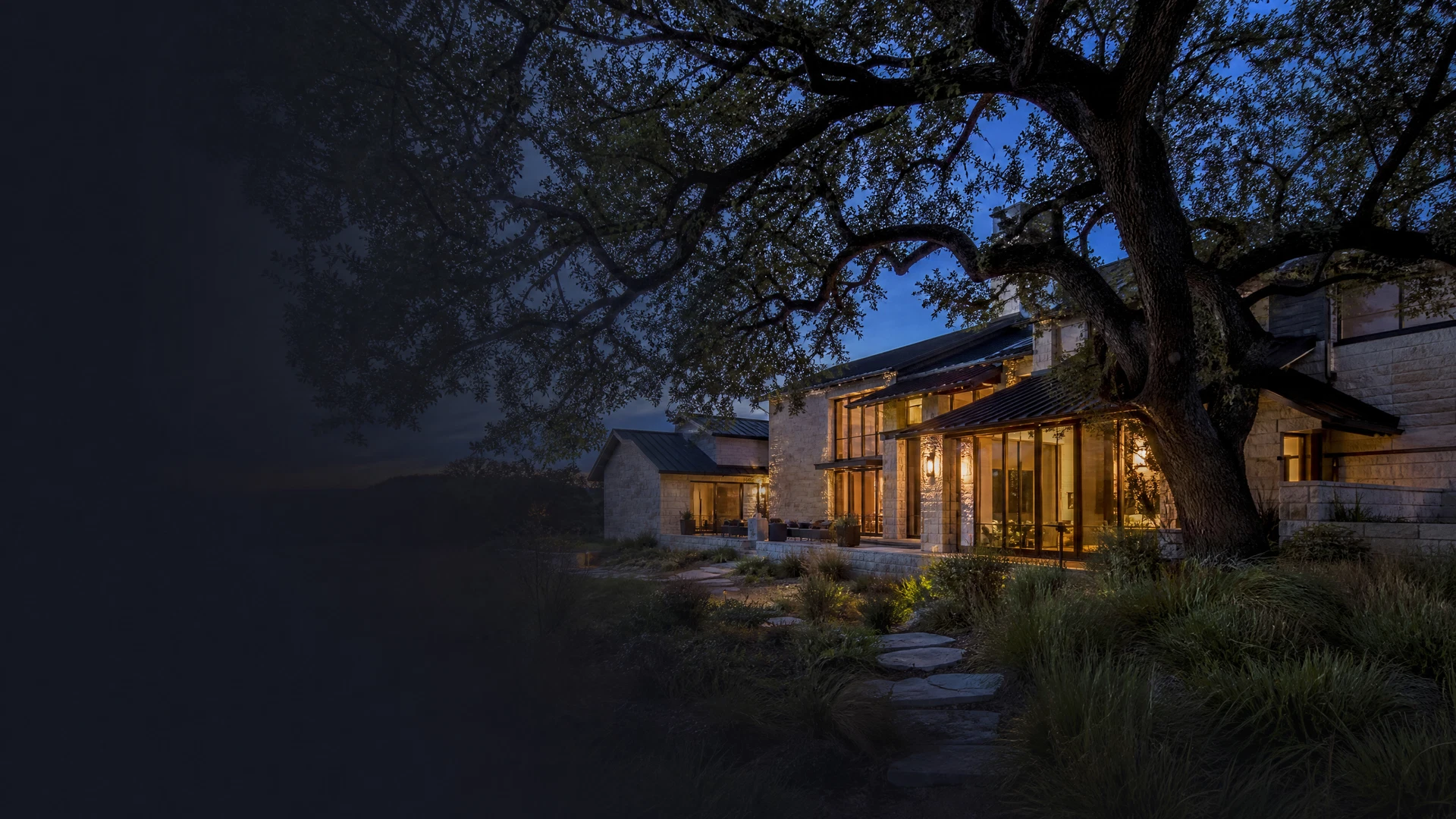
The property in context
Local ground, growth, access, nearby structures, and municipal context can shape the work. The address is where the practical plan becomes clear.
04
Storm damage, emergency response, and cleanup
Round Rock's open streets and exposure to Central Texas storms mean fallen limbs and uprooted trees are a real risk. Our emergency response focuses on making the property safe first: clearing hazards that block access, removing limbs that threaten structures, and stabilizing partially fallen trees to prevent further collapse. We work with homeowners on prioritizing what gets removed immediately versus what can wait for a full estimate.
Storm cleanup in this area also requires attention to disposal and disease control. Debris from live oaks must be handled with care in oak-wilt season; when necessary we segregate and haul oak brush for proper disposal. We also document damage and provide photos and written notes that homeowners can use with their insurers, while avoiding any definitive disease diagnoses from photos alone.
05
Stump grinding, site restoration, and lot clearing
After a removal the job isn't complete until the stump and roots are addressed. Stump grinding is the common approach in Round Rock neighborhoods where you want to replant, lay sod, or regrade. Grinding depth, proximity to sidewalks and underground utilities, and the root mass size all affect the time and cost. We bring grinders sized to the job and leave the site ready for planting or lawn work, with options for hauling away grindings or leaving them as mulch.
For larger projects — driveway rework, pool prep, or lot clearing for house additions — we combine removals, stump grinding, and hauling into a single planned operation. Lot clearing work typically requires coordination with the city for permits and with utility companies for service disconnections or relocations. We outline the sequence so you can schedule follow-on trades like builders or landscapers without surprises.
06
Costs, scheduling, and decision boundaries
The main scope drivers in Round Rock are tree size and species, access to the work area, proximity to structures or power lines, whether a crane or traffic control is needed, and permit requirements. A large live oak on a limestone edge with roots under a driveway will cost more to remove safely than a small hackberry in a backyard with easy truck access. Debris hauling, stump grinding, and disposal add to the total. We break those items out on the written quote so you can choose which services to include.
Schedule wise, routine pruning and non-urgent removals can usually be booked within a few weeks depending on season; storm response and urgent hazards are handled as priorities. We will not make medical or disease diagnoses from photos; if you suspect oak wilt or other serious pathogens we'll recommend a qualified specialist. To move forward, call (512) 387-2671 or visit us to request a written quote and we’ll outline permit needs and any expected coordination with Oncor or the city.
Where this work happens
Where this work happens in the Austin area
Considered answers
Straight answers about Round Rock
How can Round Rock tree work be planned without assuming Austin rules apply?
Many residential removals in Round Rock require a permit through the city's residential tree-removal portal. Requirements depend on tree size, species, and whether the tree is in a protected area. Permit rules change, so confirm current requirements for your address. We can prepare the documentation and upload it to the portal for you as part of the quoted services.
What does Oncor coordination involve and will you work on power lines?
If a tree is near electric distribution or service lines, we notify and coordinate with Oncor to ensure safety. Work on energized conductors belongs with the utility; our crews do not perform work on live power lines. Coordination may involve Oncor scheduling a crew to de-energize or provide clearance before we proceed.
How do you handle oak-wilt concerns in Round Rock?
We follow pruning practices and timing that reduce oak-wilt risk—avoiding high-risk pruning periods and removing oak brush promptly. We do not provide oak-wilt diagnosiss ourselves. If oak-wilt is suspected, we will advise on referral options and proper removal and disposal methods to limit spread.
What affects the price of a tree job on Blackland clay versus limestone edge?
Soil affects root stability and equipment needs. On heavy Blackland clay, trees may be more stable but machinery can sink, increasing labor and access prep. Thin soils over limestone often create wide shallow root systems and unpredictable break points, which can require more complex removal sequences and safety measures. Access, tree species, size, proximity to structures or lines, and permit needs all factor into the final price.
Private assessment
Begin with the property.
Tell us where the tree stands, what changed, and what it could reach. We will clarify the next step before work begins.
For urgent work, call (512) 387-2671