
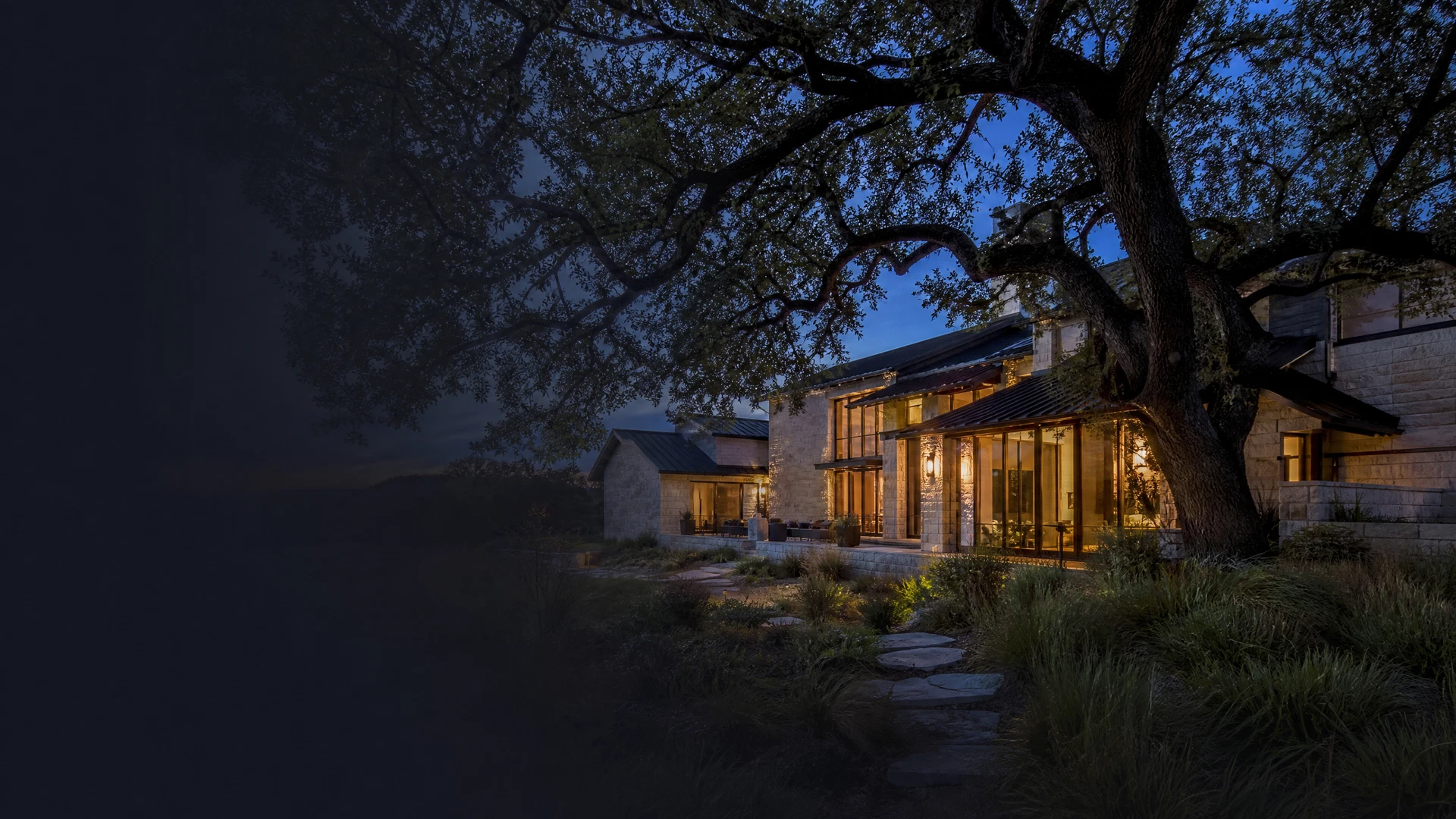
Buda residential tree services along the I‑35 corridor
Tree care for Buda properties.
From live oak pruning to storm damage removal, we plan around Austin‑area clay and limestone, subdivision constraints, and address‑specific permit rules. Request a written quote at (512) 387-2671.
Buda / local guide
A property guide for buda / local guide frames the questions that shape access, protection, timing, and the intended finish before a written scope.
01
Local conditions that change the work
Buda properties combine older live oaks and pecans with fast‑growing subdivision plantings on clay and shallow limestone. Clay soils compact and hold water differently than sandy soils; limestone near the surface makes some root systems shallow and brittle. These soil traits change which cuts we make, how we set rigging, and whether a tree is a candidate for pruning versus removal.
Wind and drought stress are frequent drivers of problems. Extended drought can desiccate feeder roots and reduce a tree’s tolerance for heavy pruning, while Buda’s winds can exploit structural weaknesses in older trees. Drainage, access across narrow easements, and sometimes limited street parking in newer developments affect equipment choice and crew setup. Confirm current requirements for your address or project with the city or Hays County before work begins.
02
Pruning and crown work — live oaks, pecans, and young trees
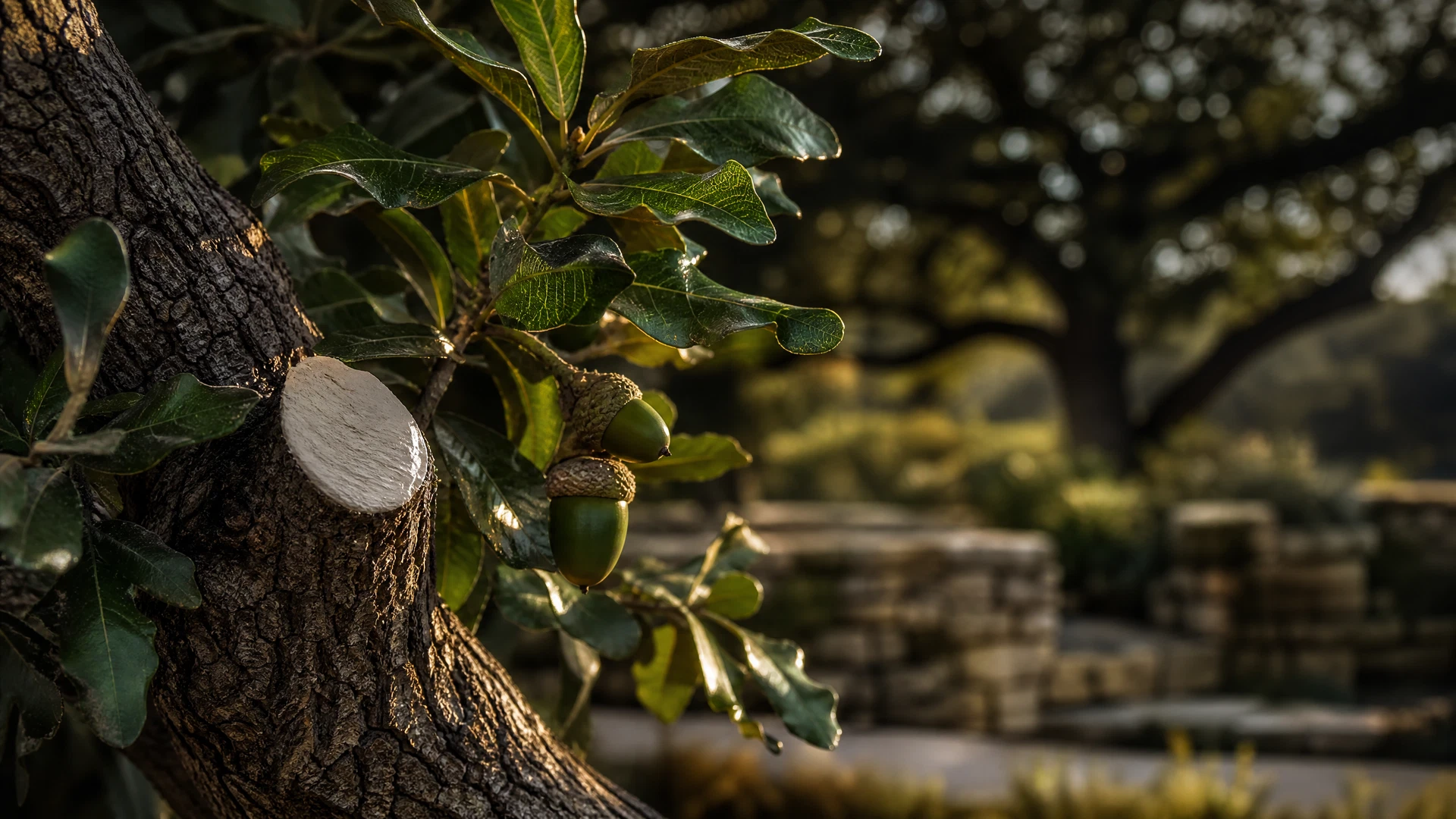
Pruning in Buda is about selective reduction and long‑term structure, not cosmetic shaping. For older live oaks and pecans we remove dead wood, thin congested areas to reduce sail, and do targeted reductions to lower limbs that threaten roofs or lines. With young subdivision trees we focus on structural pruning and corrective cuts so they form a single, well‑spaced scaffold system as they grow.
We balance pruning extent against drought and root limitations. Heavy crown reduction may be safe for one species or tree and risky for another in shallow soils. When work is near energized lines, the utility is responsible for the final connection and clearance; we coordinate with them but do not perform utility line work ourselves.
03
Removals and stump grinding where access, slope, or drainage complicate the job
Deciding to remove a tree in Buda often hinges on more than health: proximity to structures, slope, driveway access, and stormwater flow can make removals more complex and costly. Older pecans over driveways or live oaks with major decay may require sectional removals and careful rigging to protect hardscapes. When streets are narrow or the yard has drainage swales, we plan crane alternatives, smaller rigging, or staged removals.
Stump grinding is the usual follow‑up unless you prefer a full stump excavation. Grinding depth and disposal depend on whether you want to replant in the same spot, and on nearby limestone that can bind the equipment. We discuss tradeoffs — leaving a shallow stump vs. deeper grinding — and how that affects replanting options and drainage.
Property note
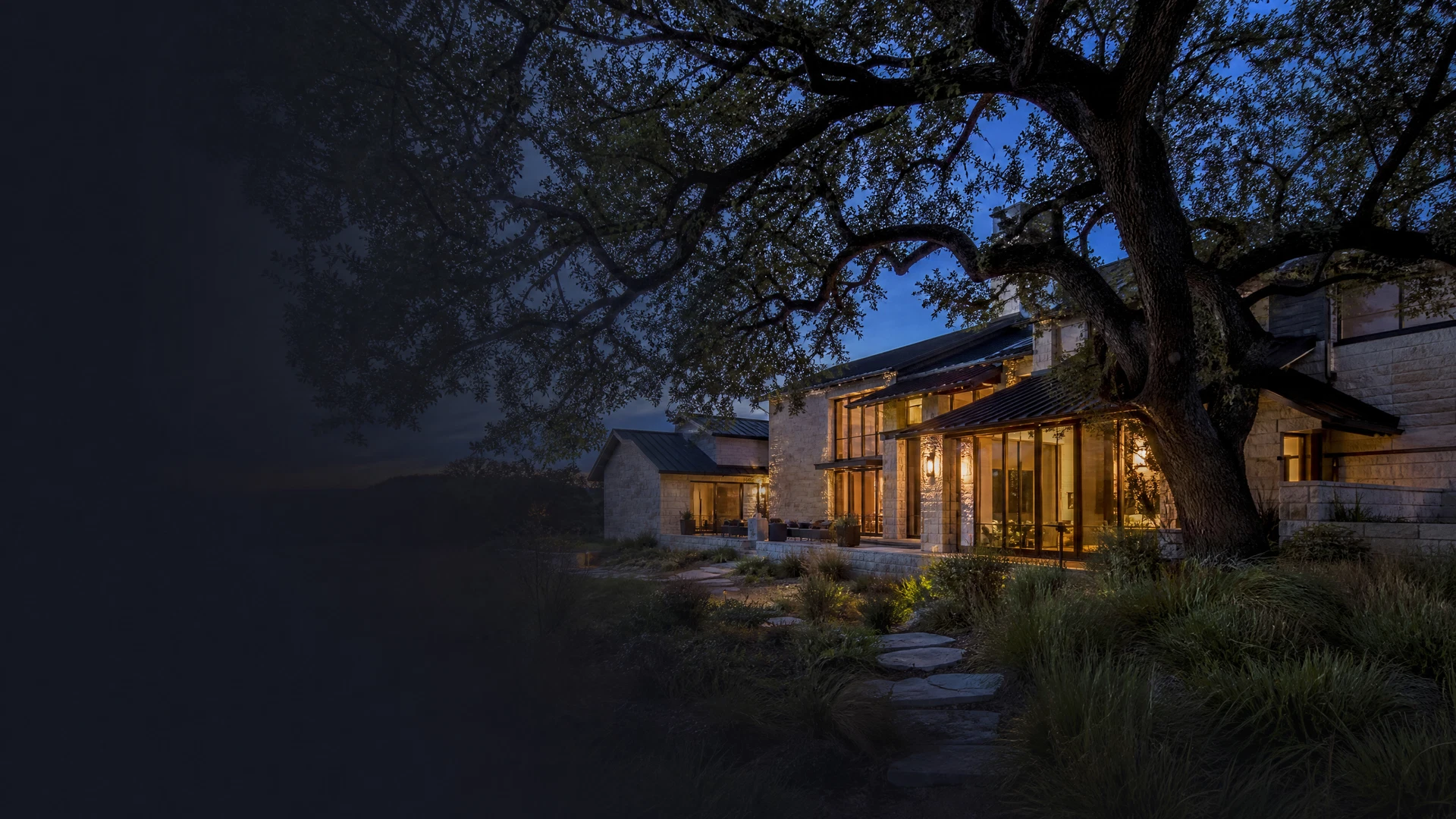
The property in context
Local ground, growth, access, nearby structures, and municipal context can shape the work. The address is where the practical plan becomes clear.
04
Emergency storm response and hazard mitigation
Storm damage is common during strong seasonal storms. Our crews sort hazards from non‑urgent debris: a limb across a roof or downed trunk touching a building becomes immediate hazard work; scattered small limbs may be scheduled. We prioritize public safety, egress paths, and stabilizing trees that could fall into occupied structures. If the tree involves energized lines, contact the utility first; work on lines belongs to them.
Emergency work often has higher scope drivers: overtime, traffic control, and the need for specialized rigging on unstable trees. We document conditions and advise on longer‑term repairs like cabling, bracing, or removal if a tree’s structural integrity is compromised. We do not diagnose disease from photos, so when decay or disease is suspected we recommend on‑site inspection and can refer specialists as needed.
05
Planting, young‑tree care, and drought management
Planting in Buda needs to account for clay/limestone soils and future root space. We recommend species and planting locations that match soil depth, drainage, and the utility corridor. Young trees get structural pruning and staking only when necessary; improperly staked trees can develop weak trunks. Irrigation and mulch practices tailored to clay soils help young roots establish without sitting in saturated pockets.
Drought management is largely about root health and realistic expectations. We outline irrigation cycles that reduce stress while avoiding overwatering in heavy clay. For established trees that show drought stress, we offer watering plans and mulching strategies, and explain when more intervention (like adjusting soil grade or installing root‑available watering) is a reasonable next step.
06
Permits, scope drivers, and decision boundaries
Buda and Hays County have address‑specific permitting and protected‑tree rules that can affect the timeline and cost. Before work starts we check permit requirements for your property, and we advise you to confirm current rules for your address or project with the permitting office. Some removals require city approval, tree protection measures, or specific disposal methods.
Cost drivers include tree size, proximity to structures, slope and access, required permits, and whether traffic control or crane access is needed. Decision boundaries are practical: when a tree can be pruned safely versus when decay, root failure, or repeat hazards make removal the more cost‑effective choice. We explain those tradeoffs on site and put them in writing so you can compare options.
Where this work happens
Where this work happens in the Austin area
Considered answers
Straight answers about Buda
Do I need a permit to remove or prune trees in Buda?
Permit requirements depend on the tree size, species, and whether your property is inside city limits or a specific subdivision. Some protected trees may require a permit for removal or replacement plantings. We check permitting rules for you and explain what's likely required, but please confirm current requirements for your address with the city or county permitting office before work begins.
How do you decide whether to prune a troubled live oak or remove it?
We evaluate structural soundness, extent of decay, root condition, proximity to structures, and the tree’s ability to tolerate pruning given soil and drought stress. Pruning is chosen when it reduces risk and preserves long‑term health. Removal is recommended when decay, root failure, or repeated hazardous failures make the tree unsafe or when avoiding damage to structures becomes impractical. We explain tradeoffs and scope in a written quote.
Can you handle a tree that fell on my roof after a storm?
We prioritize immediate hazards and can secure the site, remove debris, and perform emergency stabilization. If the fallen tree involves energized lines, contact the utility first—work on live lines belongs to them. Emergency work can require special rigging and traffic control, which increases cost; we will document conditions and follow up with options for repairs or removal.
What should I plant to replace a removed tree in clay and limestone soils?
Choose species that tolerate shallow soil over limestone and seasonal drought. We suggest planting locations with good root room and drainage, avoid low spots that collect water, and recommend structural pruning schedules for young trees. We provide site‑specific planting recommendations and an establishment plan that includes mulch and watering tailored to clay soils.
Private assessment
Begin with the property.
Tell us where the tree stands, what changed, and what it could reach. We will clarify the next step before work begins.
For urgent work, call (512) 387-2671