
Schedule an on-site inspection
We visit to measure stump diameter, check access, locate fences and structures, and confirm visible root patterns. Please mark underground irrigation and call 811 before our visit.
Stump grinding for Pflugerville yards
Clear stumps without unnecessary excavation — tailored to Pflugerville’s Blackland clay, compact lots, and mature live oaks and cedar elms.
Pflugerville / service guide
A property guide for pflugerville / service guide frames the questions that shape access, protection, timing, and the intended finish before a written scope.
01
Stump grinding removes the visible trunk and most surface roots with a rotating cutter mounted on a tracked machine. For homeowners in Pflugerville with compact subdivision lots and maturing live oaks or cedar elms, grinding is usually faster, less disruptive to surrounding lawns and fences, and cheaper than full stump excavation.
Grinding is not always the best option if a stump sits under a slab, is directly against a retaining wall or fence footing, or when the property requires total root removal for utilities or new construction. We’ll outline tradeoffs on-site and suggest alternatives when excavation or root cutting is necessary.
The work, in order
We visit to measure stump diameter, check access, locate fences and structures, and confirm visible root patterns. Please mark underground irrigation and call 811 before our visit.
We verify markings and discuss any city tree-preservation or permit questions for Pflugerville; you should confirm current rules for your property. Any work near energized lines belongs with the utility.
We protect lawns, fences, hardscapes, and neighboring properties, and establish a chip handling plan. If gates are narrow, we message options for machine staging or partial manual grinding.
We grind the trunk stump and accessible surface roots to the agreed depth, cutting only what’s necessary for lawn or construction needs and noting any structural roots that require special care.
We backfill with screened material, settle and grade to match surrounding lawn, then remove or spread chips per your choice. You’ll get written notes on expected settling and replanting limits.
Property note
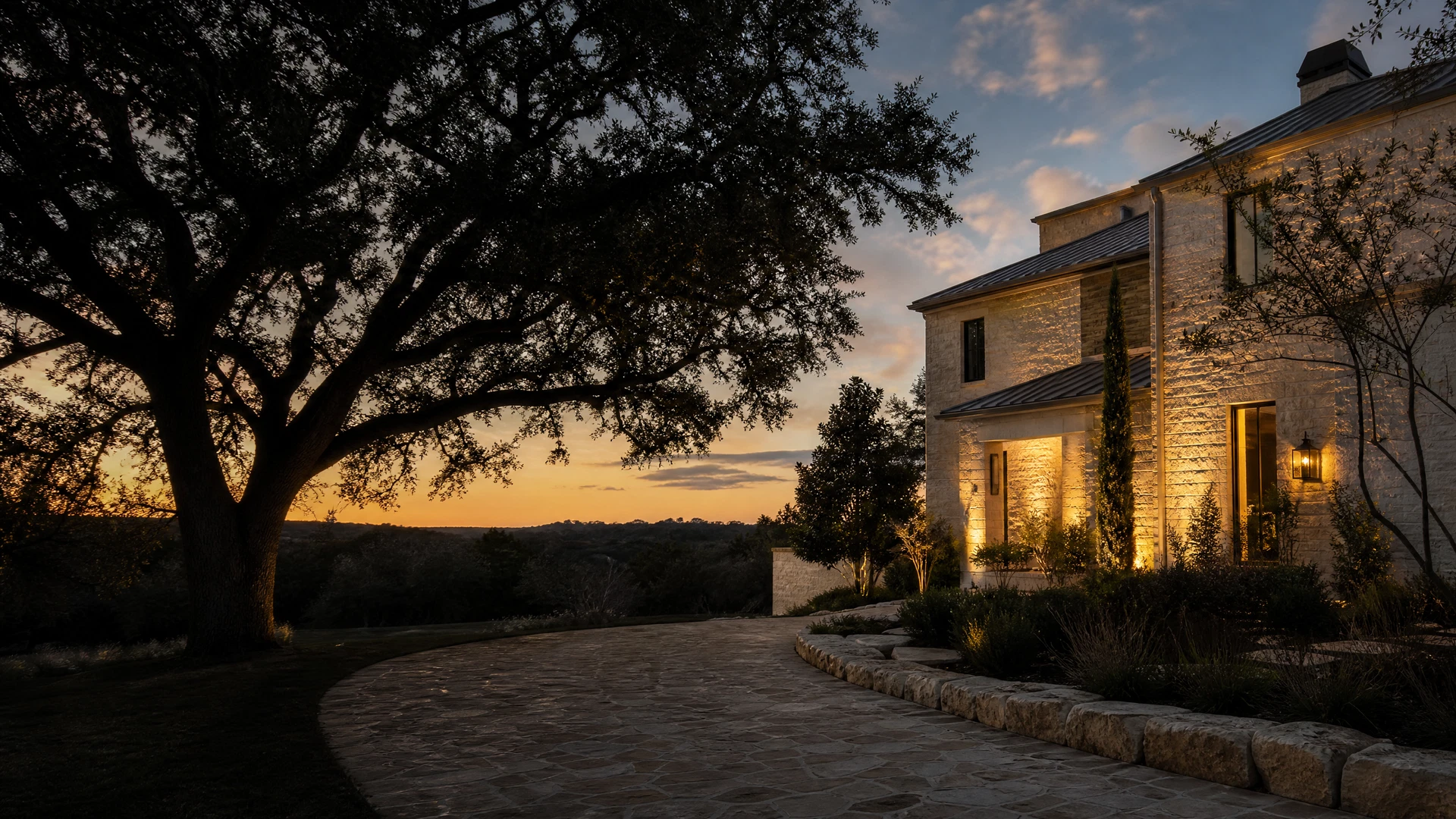
A service becomes a real scope only when the tree is considered alongside the property, circulation, structures, protection, and material plan.
02
The key scope drivers are stump diameter, root spread, and how easily a grinder can reach the site. Stumps over 24–30 inches in diameter or those behind fences and through narrow gates require more time, special attachments, or manual follow-up, which increases cost. In Pflugerville that means checking for fence conflicts and tight side yards common in newer subdivisions.
We always locate underground utilities before grinding. Call 811 yourself and let us confirm markings; any work near energized lines belongs with the utility. If roots are tangled with utility lines or a private irrigation main, we’ll pause and recommend the safe next steps rather than risk damage.
03
Typical grind depth in turf or landscape beds is 4–12 inches below grade. On compact Blackland clay soils we often go deeper — up to 12 inches — to reduce visible hollows and to shorten settling time, but going deeper can increase the chance of intersecting major lateral roots and utilities. We explain the tradeoff: deeper grind reduces future hazards and shortcuts but adds cost and may require more aggressive backfill.
Surface roots from live oaks and cedar elms are common in Pflugerville. We grind surface roots that interfere with mowing or landscaping; very large lateral roots that are structural or under fences may need selective cutting and stump/ root management so structures stay stable. When cutting roots we discuss how pruning will affect tree health and whether the remaining tree should be monitored or removed.
04
Grinding produces wood chips — the volume depends on stump size and grind depth. On clay soils chips tend to mat and hold moisture; we can either leave chips spread as a coarse mulch (thinned and mixed into beds) or haul them off if you prefer a cleaner lawn. For replanting areas we remove chips entirely to avoid settling problems and compaction.
If you choose on-site reuse, chips are a good short-term mulch but should not be used as a finished topsoil substitute. We offer both drop-and-spread and full haul-away. We’ll give you the chip volume estimate during the quote so you can decide which option fits the landscape plan and neighborhood HOA rules.
05
After grinding we backfill the hole with a blend of screened topsoil and native material to minimize settling. Expect some settling over the first 6–12 months in dense Blackland clay; we plan for that and leave a small allowance so final grading is easier. Complete elimination of all voids is rarely possible without full excavation; grinding plus thoughtful backfill is a practical compromise for most yards.
Replanting over a ground stump is possible but has limits. For small ornamentals and turf you can replant shortly after backfill. For new medium-to-large trees, local development tree-preservation rules and root space on compact lots mean you should choose species and locations carefully — live oaks, for example, need room for large laterals. Check current city requirements for tree replacement and permit triggers for your address before planting.
06
Cost drivers are stump diameter, access, root complexity, whether chip hauling is required, and any needed root or fence work. Urban lots with open wind exposure in Pflugerville can add time if we need to protect neighboring properties during grinding. We give a line-item estimate so you can see how each choice affects price.
We won’t grind if locating utilities isn’t possible or if a stump sits against an active foundation or energized equipment — those are decision boundaries where excavation or professional utility coordination is safer. Call (512) 387-2671 to request a written quote and schedule a site inspection; we’ll document options so you can compare grinding, excavation, or stump-and-root removal.
From the property owner
“Excellent service. Great communications, skills and professionalism! Stuck to the quoted price and cleaned up afterwards. Will use again!”
Considered answers
We usually grind 4–12 inches below grade for lawns and up to around 12 inches on heavy clay to reduce visible hollows. Deeper grinding reduces future surface issues but raises cost and the chance of meeting major lateral roots or buried utilities. We recommend a site visit to choose a depth that balances long-term results with safety.
We can grind near fences with care, but tight gaps sometimes require gate removal or partial manual grinding. Underground utilities must be located before work; call 811 and we’ll verify markings. Any work on or too close to energized lines belongs with the utility — we will stop and coordinate rather than take risks.
Chips can be spread as temporary mulch, mixed into beds, or hauled away. On Blackland clay some settling is normal over 6–12 months even after careful backfill, so we leave a small allowance in the finish grade. If you plan to replant turf or a large tree, removing chips and using screened topsoil reduces settling and improves establishment.
City development and tree-preservation rules vary by parcel and project type. Removal of protected trees or work tied to redevelopment can trigger requirements; check with Pflugerville city staff for your address. We’ll flag potential permit issues during the inspection but you should confirm current requirements before finalizing plans.
Where this work happens
Private assessment
Tell us where the tree stands, what changed, and what it could reach. We will clarify the next step before work begins.
For urgent work, call (512) 387-2671