Veteran-owned tree service · Austin area24/7 tree emergency: (512) 387-2671
Iron Branch Tree Services Request an assessment
Menu
Services
Service areasReviewsOur standardContactRequest an assessment
Illustrative mature oak near a refined Central Texas residence

Pflugerville tree removal

Tree removal in Pflugerville, properly planned.

Deep Blackland clay, maturing live oaks and cedar elms, and compact subdivisions make controlled removals a specific skill set in Pflugerville. We explain the process, what affects price, and the permits and safety steps you should expect.

Pflugerville / service guide

A property guide for pflugerville / service guide frames the questions that shape access, protection, timing, and the intended finish before a written scope.

01

Why controlled removal matters in Pflugerville

Pflugerville properties are changing fast: older lots with maturing live oaks and cedar elms sit next to newer infill houses on compact parcels. A straightforward cut-and-drop that might be fine on acreage usually creates unacceptable damage on a small suburban lot. Controlled removal means planning a cut sequence and lowering large sections to a safe ground point so roof lines, fences, and landscaping are preserved.

Controlled removal also reduces risk to neighbors and public ways. Wind exposure here can be significant — trees grown in open lots often have long limbs and uneven weight. That increases swing during a cut; a plan for staged cuts and proper rigging keeps the work predictable and minimizes the chance of branches hitting structures or public sidewalks.

Illustrative Central Texas residential tree and property detail
Illustrative Pflugerville site study — access and protection are planned before equipment arrives.

The work, in order

A controlled sequence from assessment to close

01

Schedule a site visit

We come to the property to inspect the tree, measure distances to structures, note utilities, and review access. This allows us to scope whether a permit, crane, or special rigging will be necessary. On arrival we discuss your priorities and any neighborhood constraints.

02

Identify hazards and permits

We record potential hazards — overhead energized lines, tight fences, or nearby roofs — and check whether local tree-preservation rules or a tree removal permit apply. If utility work is involved, remember work near energized lines belongs with the utility and we coordinate as needed.

03

Produce a rigging and work plan

Based on access and hazards, we draft a plan showing cut sequence, rigging points, equipment staging, and clean-up scope. The plan minimizes impact to landscaping and structures and defines how we’ll lower large sections safely.

04

Execute removal and debris handling

Crews perform the removal using the agreed rigging plan, protecting property with mats and barriers when heavy equipment is required. We chip, haul, or stack material per your request and perform a thorough site cleanup.

05

Final inspection and follow-up

After cleanup we walk the site with you, point out any root or soil issues related to Blackland clay, and note any follow-up pruning or mitigation that might be recommended. If a permit filing or mitigation documentation is needed, we provide the details for your records.

Illustrative Central Texas residential tree and property detail

Property note

The property in context

A service becomes a real scope only when the tree is considered alongside the property, circulation, structures, protection, and material plan.

02

Access, lot layout, and Blackland clay

Access and the condition of the ground are fundamental scope drivers in Pflugerville. The heavy, expansive Blackland clay common across the region binds and heaves; when we bring equipment onto a yard, we must plan for soil compaction and mud. Narrow drives and steep or soft entries may require smaller tools and more hand work — that increases labor time compared with properties where machines can park close to the tree.

Lot layout matters too. Compact lots with fences, driveways, or air-conditioning units close to the trunk require sectional removal and often more cleaning. Where trucks and cranes cannot sit near the work area, our crews use controlled lowering, rope rigging, and sometimes smaller tracked equipment to protect both the tree’s root zone and the finished grade.

03

Structures, fences, utilities, and safety boundaries

Most Pflugerville jobs involve some interface with structures: houses, detached garages, pergolas, decks and perimeter fences are common. Removing a tree next to these items is a sequence of cutting, rigging, and gradual lowering. We plan anchor points and rigging paths to avoid pulling on fences or putting load on a fragile structure. If the tree sits over or very near a house, the process becomes more controlled and time-consuming; lifts and additional rigging hardware are common site factors.

Utility conflicts are frequent on compact lots. If a tree is near an energized line, work near the line belongs with the utility — do not attempt to remove contact yourself. We coordinate with utilities as needed and design rigging and drop zones to avoid underground utilities, gas meters, and irrigation components. When utilities present a permit or coordination requirement, that also changes scheduling and cost.

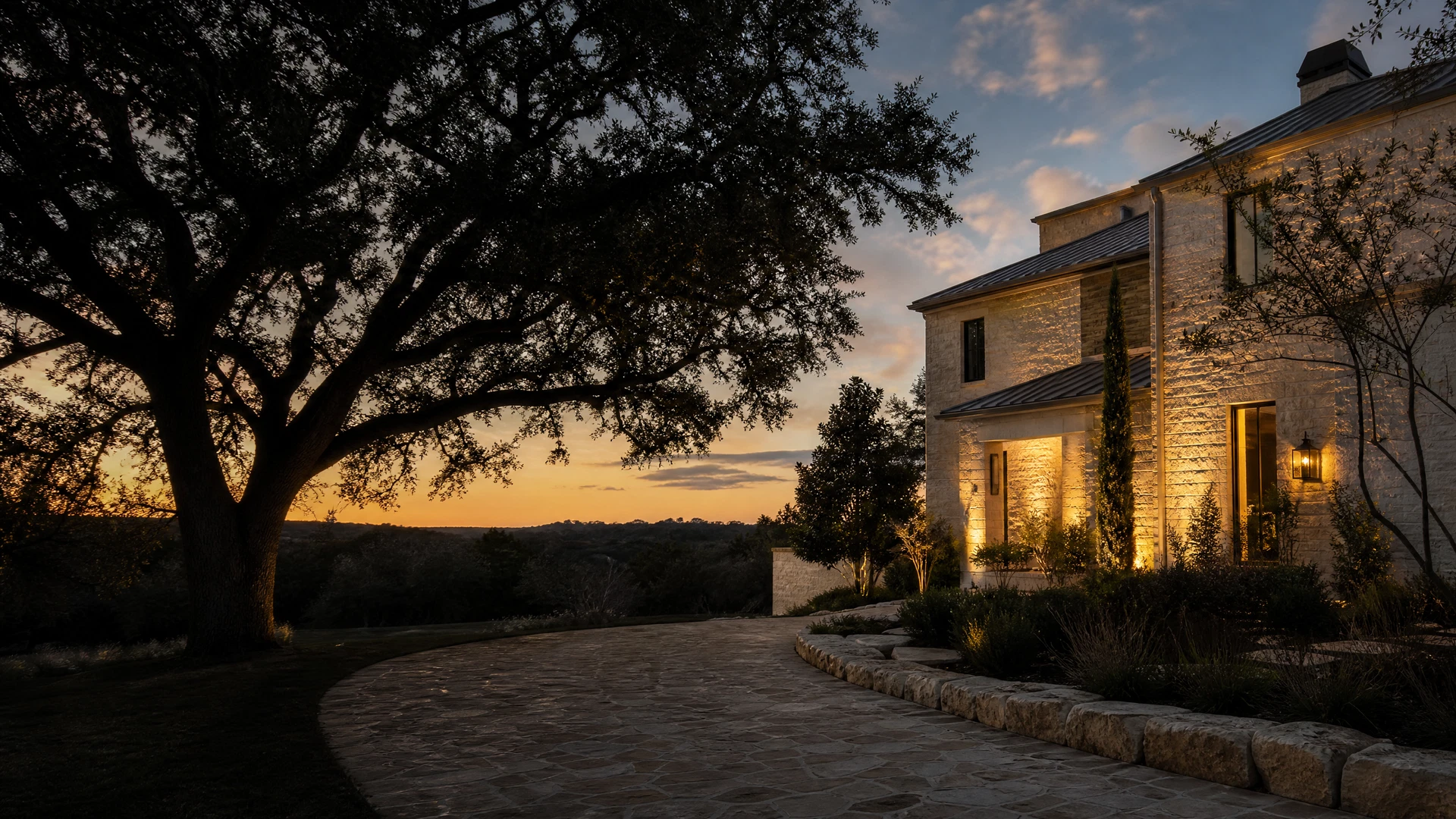
Illustrative Central Texas residential tree and property detail
Illustrative residential setting — controlled tree work protects the ground, structures, and circulation around it.

04

Permits and Pflugerville tree-preservation rules

Pflugerville and surrounding development plans include tree-preservation rules that can affect removal options and cost. Some neighborhoods and developments have canopy requirements or require mitigation for certain heritage trees. Before any removal we check local regulations that apply to the property, but you should confirm current requirements for your address with the city. Permit rules and replacement requirements can change case by case and may add time and expense to a project.

When a permit is required, the process usually adds a short administrative lead time: submitting site photos, a plan for removal, and sometimes a mitigation plan. That paperwork is separate from the on-the-ground work and is factored into our quotes. We can help identify when a permit check is necessary and advise on the likely implications, but final responsibility for confirming requirements rests with the property owner.

05

Rigging methods, debris handling, and disposal

We plan rigging to match the site: rope-and-harness lowering on tight yards, crane-assisted lifts where drive space and access permit, and sectional cutting when neighbors or structures increase risk. Rigging choices influence crew size and the equipment footprint. For example, a crane reduces time aloft but needs secure setup area; on compact lots we often trade crane time for more hands-on rigging and longer crew hours.

Debris handling is part of the job scope and a transparent cost item. We chip limb material, remove logs, and haul away brush, or leave processed firewood for the homeowner when requested. Because Blackland clay makes access unpredictable, we include measures like mats or protective pads to reduce lawn damage during equipment staging. Cleanup includes sweeping debris from paved areas and a final inspection of the drop zones.

06

Site-specific scope drivers and how to decide

Cost comes down to a few predictable factors: tree size and species (maturing live oaks and cedar elms can carry heavy limbs), proximity to structures and utilities, access for equipment, and whether a permit or mitigation is required. Soil conditions like deep Blackland clay can increase time and equipment needs because crews must protect the grade and sometimes work with smaller gear to limit compaction.

When deciding whether to remove or prune, consider long-term risk and value. Removing a hazardous, crowded, or structurally compromised tree may be the safest long-term decision; pruning can be a temporary fix that still leaves the root and decay issues in place. We outline the tradeoffs on site so you can make an informed choice. To move forward, call (512) 387-2671 or request a written quote and we'll schedule a site visit tailored to your Pflugerville property.

Considered answers

Straight answers about Pflugerville

What should a Pflugerville property owner verify before scheduling a removal?

Possibly. Pflugerville and its developments can have tree-preservation rules or permit requirements depending on the tree’s size, species, and the location within a subdivision. We check the likely requirements during the site visit and advise, but confirm current rules for your address with the city before scheduling. Permit timelines can add days to the project.

How does Blackland clay affect removal and post-work recovery?

Blackland clay is expansive and compacts easily. It affects how we stage equipment and whether we need protective mats or smaller tracked machines. After removal you may see surface cracking or heaving in heavy clay; regrading and a plan for soil amendment or revised drainage may be necessary to stabilize the lawn and future plantings.

What if the tree is near power lines?

If a tree contacts or is immediately adjacent to an energized line, work near the line belongs with the utility. We coordinate with the utility when we can, but we do not perform energized-line work ourselves. For non-energized clearances, we use staged cuts and specialized rigging to maintain safe distances and reduce risk.

Can you remove a tree suspected of oak wilt or other disease?

We do not diagnose disease from photos. Oak-wilt topics are handled carefully: removal and disposal methods matter for infected oaks, and local experts or plant health specialists should be consulted. We can perform a safe removal and follow recommended disposal practices, and we will refer you to a plant-health specialist for diagnosis and diagnostic guidance and referral options when appropriate.

Where this work happens

Where this work happens in the Austin area

AustinGeorgetownRound RockCedar ParkLeanderHuttoPflugervilleWells BranchSunset ValleyManchacaBudaManorTarrytownHyde ParkAllandaleCrestviewBarton Hills & ZilkerTravis HeightsCircle COak Hill

Private assessment

Begin with the property.

Tell us where the tree stands, what changed, and what it could reach. We will clarify the next step before work begins.

For urgent work, call (512) 387-2671

Your request is sent securely to Iron Branch. For an active emergency, call from a safe location.